
Phoenix HVAC Cost Guide • Updated for 2026
AC Replacement Cost in Phoenix (2026)
The average AC replacement cost in Phoenix is typically $8,500 to $14,000+ in 2026. Your final price depends on system size (tonnage), SEER2 efficiency, ductwork/airflow, and the difficulty of the install.
You’ll also see why “brand” is only part of the story—and how the install quality and airflow determine whether your new system lasts through Phoenix summers.
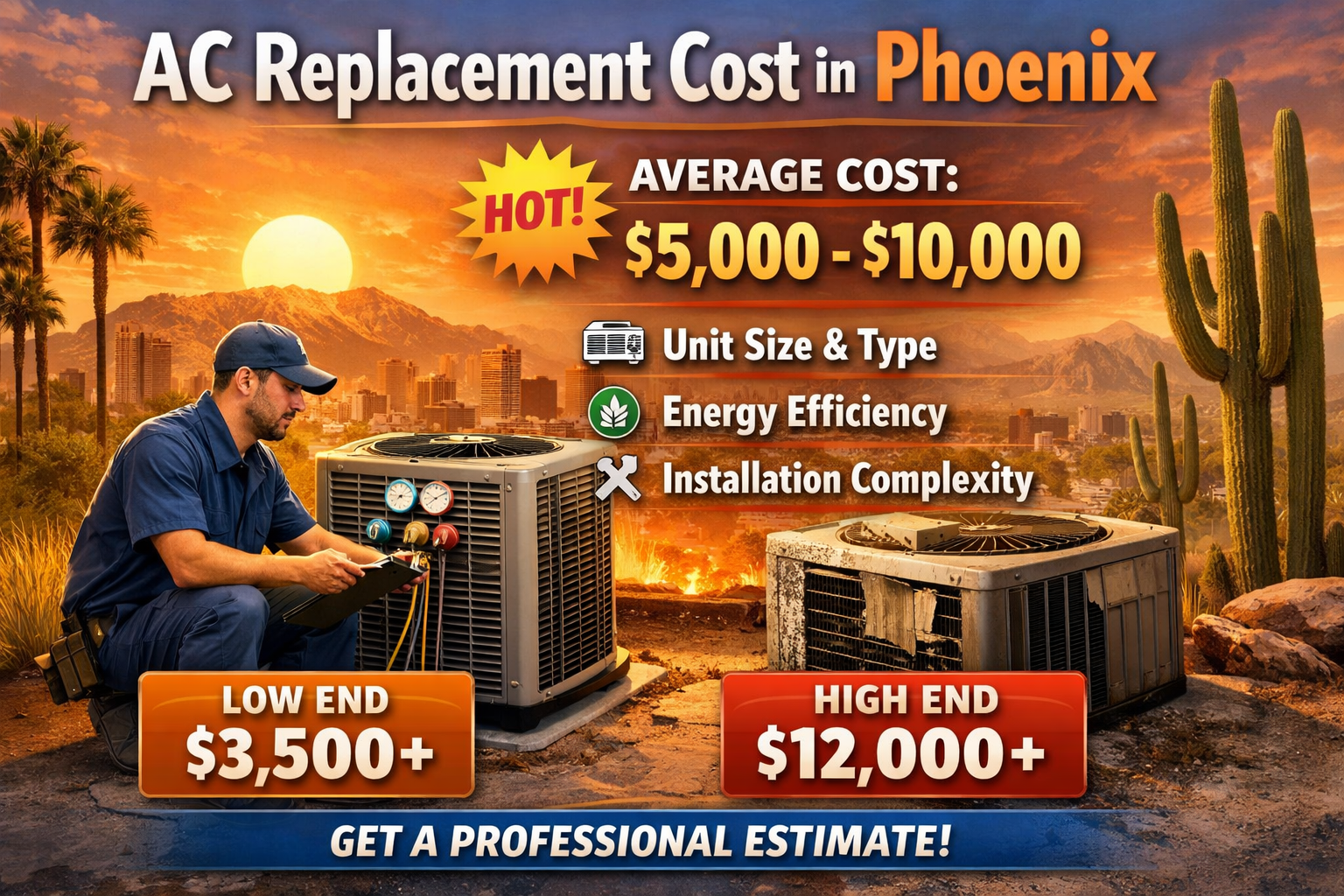
Average AC Replacement Cost in Phoenix (2026)
For most homes, a full replacement includes the outdoor condenser, indoor coil, refrigerant work, startup, and permits/code compliance. Phoenix pricing trends higher than many markets because AC systems run longer, and homes often need airflow upgrades to prevent coil freeze-ups and premature compressor wear.
If you want a quick starting point, use this table as a range—then refine it based on SEER2 tier, duct condition, and whether your electrical or drainage needs updates.
Typical AC Replacement Cost by Home Size
| Home Size | Common System Size | Typical Cost Range | Most common “hidden” add-ons |
|---|---|---|---|
| 1,200 – 1,600 sq ft | 2 – 2.5 ton | $7,500 – $10,500 | Return-air improvements, thermostat upgrade, minor duct sealing |
| 1,600 – 2,200 sq ft | 3 – 3.5 ton | $9,500 – $12,500 | Duct repairs, drain line fixes, attic airflow balancing |
| 2,200+ sq ft | 4 – 5 ton | $11,500 – $16,000+ | Zoning corrections, large duct upgrades, electrical/code updates |
If you’re unsure on tonnage or want a “fix vs replace” approach, start with an inspection and load check.
What Changes Your AC Replacement Quote the Most
- Tonnage / sizing: Oversized units short-cycle; undersized units run nonstop. Correct sizing protects the compressor.
- SEER2 efficiency tier: Higher SEER2 can lower operating cost, but only when airflow and ductwork are correct.
- Ductwork + return air: Phoenix homes often need return upgrades to stop hot rooms and frozen coils.
- Install difficulty: Tight clearances, roof access, long line sets, and crane needs raise labor cost.
- Electrical/code updates: Disconnects, breakers, and permits can add cost (and prevent failed inspections).
In Phoenix, the “best brand” won’t save a system that’s installed with poor airflow. The most reliable systems are the ones that are properly sized, sealed, and commissioned.
What’s Included in a Proper AC Replacement
- Removal and disposal of the old AC equipment
- New condenser + indoor coil matched to the system
- Refrigerant connections, evacuation, and proper charge
- Startup testing, temperature split verification, and safety checks
- Permits and code compliance (when required)
Want the system to last? Make sure your replacement includes airflow verification and basic commissioning—not just a swap.
SEER2 Efficiency in Phoenix: What It Really Means
SEER2 is the updated efficiency standard used to compare cooling performance. In Phoenix, higher efficiency can be worth it because cooling seasons are long and runtime is high—but only if ductwork and airflow are correct.
- Good fit: Homes with long runtimes, high power bills, and solid ductwork (or planned upgrades).
- Bad fit: Homes with major duct leakage or undersized returns that haven’t been corrected.
Trane Authorized Dealer in Phoenix
Cold Stinger Heating & Air Conditioning is a Trane Authorized Dealer. Trane systems are built for demanding climates, but your results still come down to sizing, airflow, and installation quality.
If you want brand guidance beyond marketing claims, see our HVAC brand guide: Best AC Brands & Brands to Avoid.
How to Lower Your AC Replacement Cost (Without Buying Junk)
- Fix airflow first: A right-sized mid-tier system beats a high-tier system installed on bad ductwork.
- Match equipment correctly: Condenser + coil pairing matters for efficiency and warranty.
- Replace before total failure: Emergency swaps cost more and give you fewer choices.
- Consider financing: Monthly payments can keep you in a better system and avoid “cheap now, expensive later.”
AC Replacement Cost FAQs
How much does AC replacement cost in Phoenix?
Most Phoenix homeowners pay $8,500–$14,000+ in 2026, depending on tonnage, SEER2 efficiency, ductwork, and install complexity.
Is a higher-efficiency AC worth it in Phoenix?
Often yes—Phoenix has long cooling seasons. But it only pays off when the system is sized correctly and airflow/ductwork issues are addressed.
What’s the biggest reason new AC systems fail early?
Bad airflow and incorrect sizing. Even premium equipment can fail early if the install ignores return air, duct leakage, and commissioning.