
How to Reset an HVAC Unit (Safe Step-by-Step)
Resetting an HVAC unit means safely power-cycling the system so the control board and safety switches can clear a temporary fault. The correct reset order matters: thermostat → breaker → outdoor disconnect. Below is a practical, homeowner-safe reset method, plus the most common reasons a reset won’t hold and when to call a pro.
Safety note: If you smell gas, see smoke, or hear loud electrical buzzing, do not reset. Turn the system off and call a licensed HVAC technician.
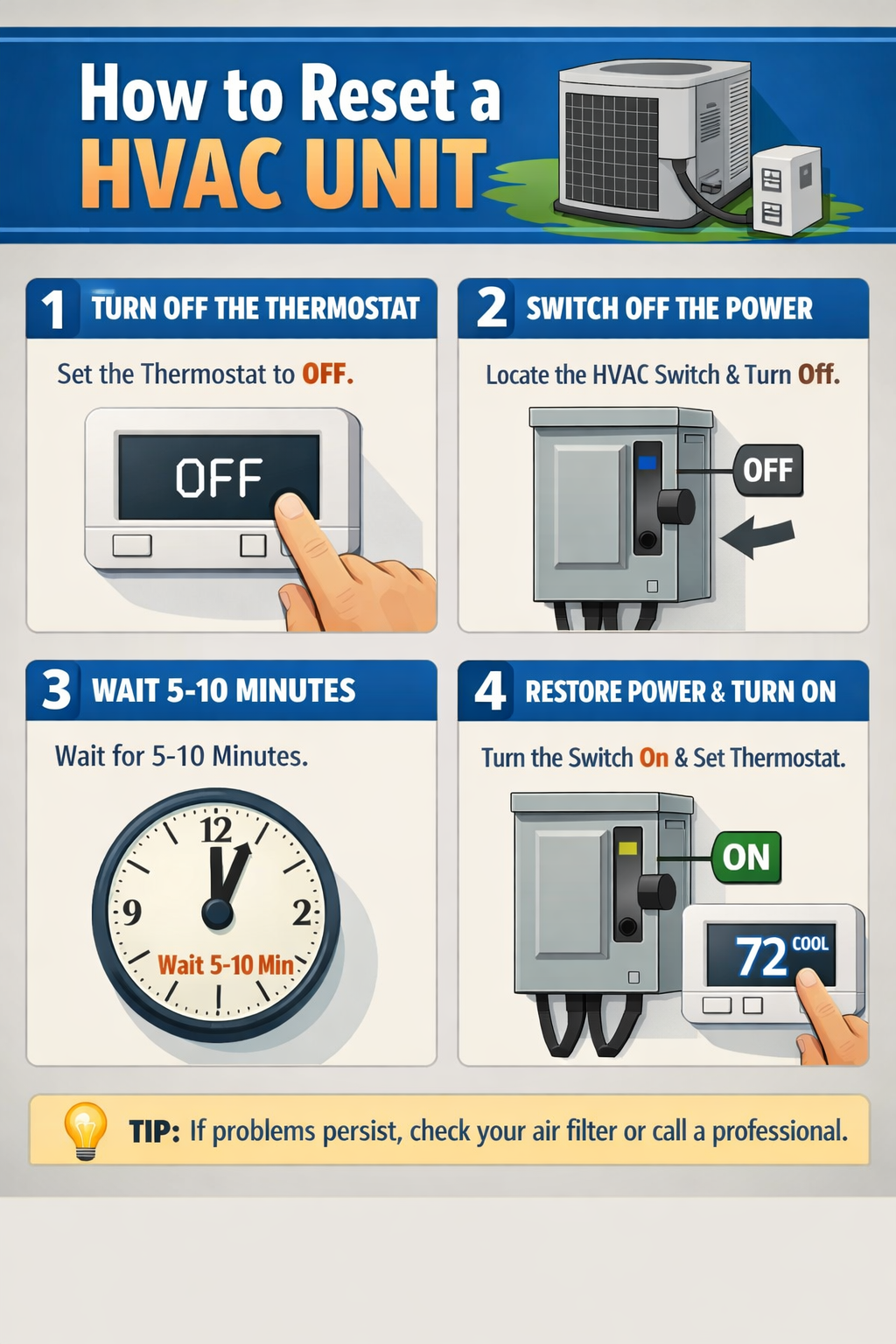
Table of contents
Before you reset (tools + safety) Reset steps (thermostat → breaker → disconnect) What a reset can fix (and what it can’t) If your HVAC won’t reset or keeps tripping Printable mini-checklist FAQs Next steps: tune-up, repair, or replacementFast answers
Serving Phoenix and nearby Valley cities: Service Areas.
Before you reset your HVAC unit
What you’ll need
- Thermostat access (app or wall thermostat)
- Breaker panel access (usually labeled AC, HVAC, Furnace, Air Handler)
- Outdoor disconnect (small box near the condenser)
- Phone timer (for the waiting period)
When you should NOT reset
- You smell gas, see smoke, or hear loud electrical buzzing
- The breaker won’t stay on (trips immediately or within minutes)
- There’s water around the furnace/air handler, or the drain pan is overflowing
- The outdoor unit is iced over heavily and you don’t know why
In these cases, call a licensed HVAC technician. Repeated resets can damage components and hide a real safety issue.
How to reset an HVAC unit (safe order)
This reset method works for most split systems (AC + furnace/air handler) and many heat pumps. The goal is to shut the system down completely, wait, then restart cleanly.
-
Turn the thermostat OFF (or set system to OFF).
Why: prevents the system from trying to start while power is unstable.
-
Turn OFF the HVAC breakers at the electrical panel.
Common labels: AC, Condenser, Furnace, Air Handler, Heat Pump.
-
Turn OFF the outdoor disconnect near the outdoor unit (pull-out handle or switch).
Why: fully isolates the condenser for a true reset.
-
Wait 10–30 minutes.
10 minutes clears many minor faults; 30 minutes helps with board lockouts and capacitor discharge.
- Turn ON the outdoor disconnect.
- Turn ON the breakers (HVAC-related circuits).
-
Turn the thermostat back ON and set to COOL (or HEAT) with a target temp.
Tip: set the target 3–5°F below room temp for cooling so it calls confidently.
-
Listen for normal startup (indoor fan, then outdoor unit within a few minutes).
If nothing happens after 5–10 minutes, check the “If it won’t reset” section below.
What a reset can fix (and what it can’t)
| A reset can help with | A reset usually won’t fix | Best next action |
|---|---|---|
| Thermostat glitch or Wi-Fi/app sync issue | Failed capacitor, contactor, or compressor | Replace thermostat batteries and confirm settings; if no start, schedule service |
| Temporary control board lockout after a power dip | Refrigerant leak / low charge | Reset once; if it returns, book diagnostic |
| Minor sensor misread after an outage | Repeated breaker trips | Stop resetting and call a tech (electrical/safety) |
| Clogged drain safety switch (after clearing the clog) | Blower motor failure / seized fan | Clear drain line and pan; if it re-trips, service required |
If your system restarts but fails again within hours or days, that’s a symptom—resets should not be a routine fix.
If your HVAC won’t reset (or the breaker keeps tripping)
Quick checks homeowners can do
- Thermostat mode: ensure System = COOL/HEAT and Fan = AUTO (not OFF)
- Air filter: replace if clogged (restricted airflow can trigger safeties)
- Outdoor unit: clear debris and confirm the disconnect is fully seated
- Indoor unit: check for water in the pan (condensate safety switch)
- Breaker behavior: if it trips instantly, stop and call a pro
Common causes that need a technician
- Weak capacitor, burned contactor, or failing compressor
- Low refrigerant or a leak causing freeze-ups and lockouts
- Overheating due to blower or duct issues
- Electrical shorts, loose connections, or damaged wiring
- Control board faults or safety switch failures
Printable mini-checklist (copy/paste)
- Thermostat OFF
- Breaker(s) OFF
- Outdoor disconnect OFF
- Wait 10–30 minutes
- Disconnect ON
- Breaker(s) ON
- Thermostat ON (COOL/HEAT)
- Confirm normal startup
Phoenix heat pro tip
If your system is struggling during extreme heat, a reset is rarely the long-term answer. A tune-up can restore airflow and efficiency and reduce emergency breakdowns.
FAQs: Resetting an HVAC unit
How long should I leave my HVAC off to reset it?
Is it safe to reset the HVAC breaker?
Why does my AC work after a reset but fails later?
Should I reset my HVAC if the outdoor unit is iced over?
What if the thermostat is on but nothing starts?
Next steps (recommended)
Educational content only. For safety, electrical work and sealed-system refrigerant diagnostics should be performed by licensed professionals.